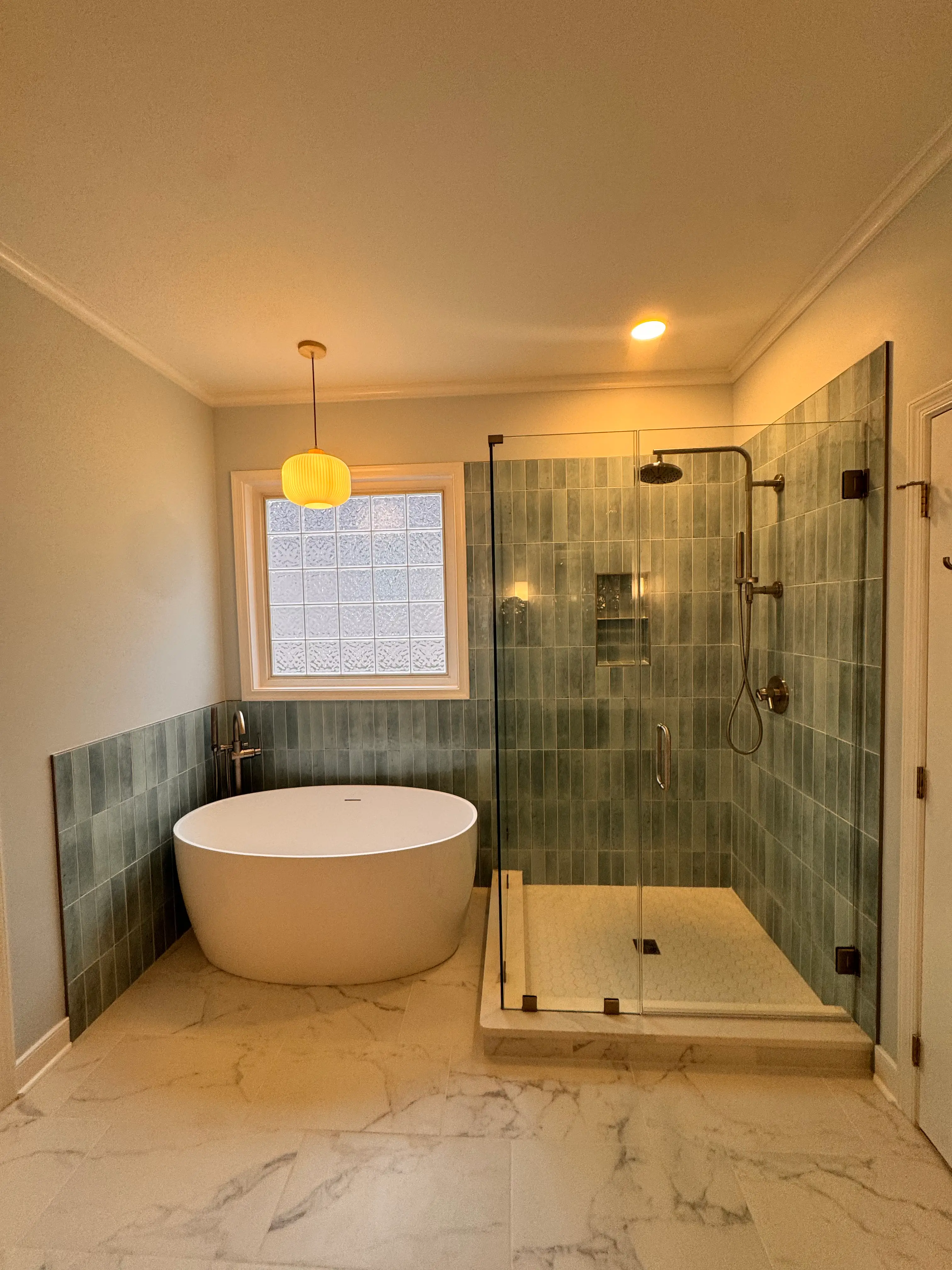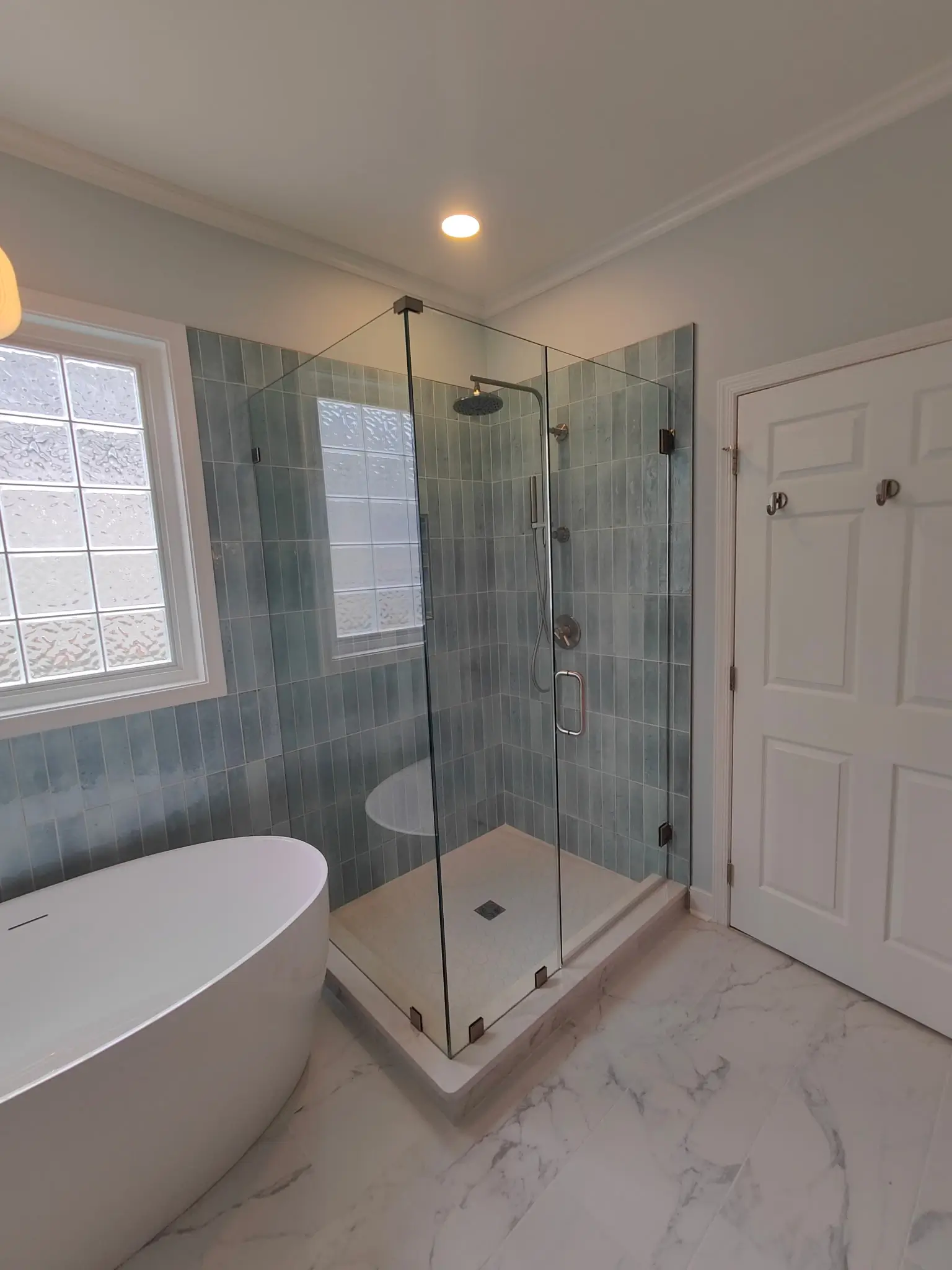
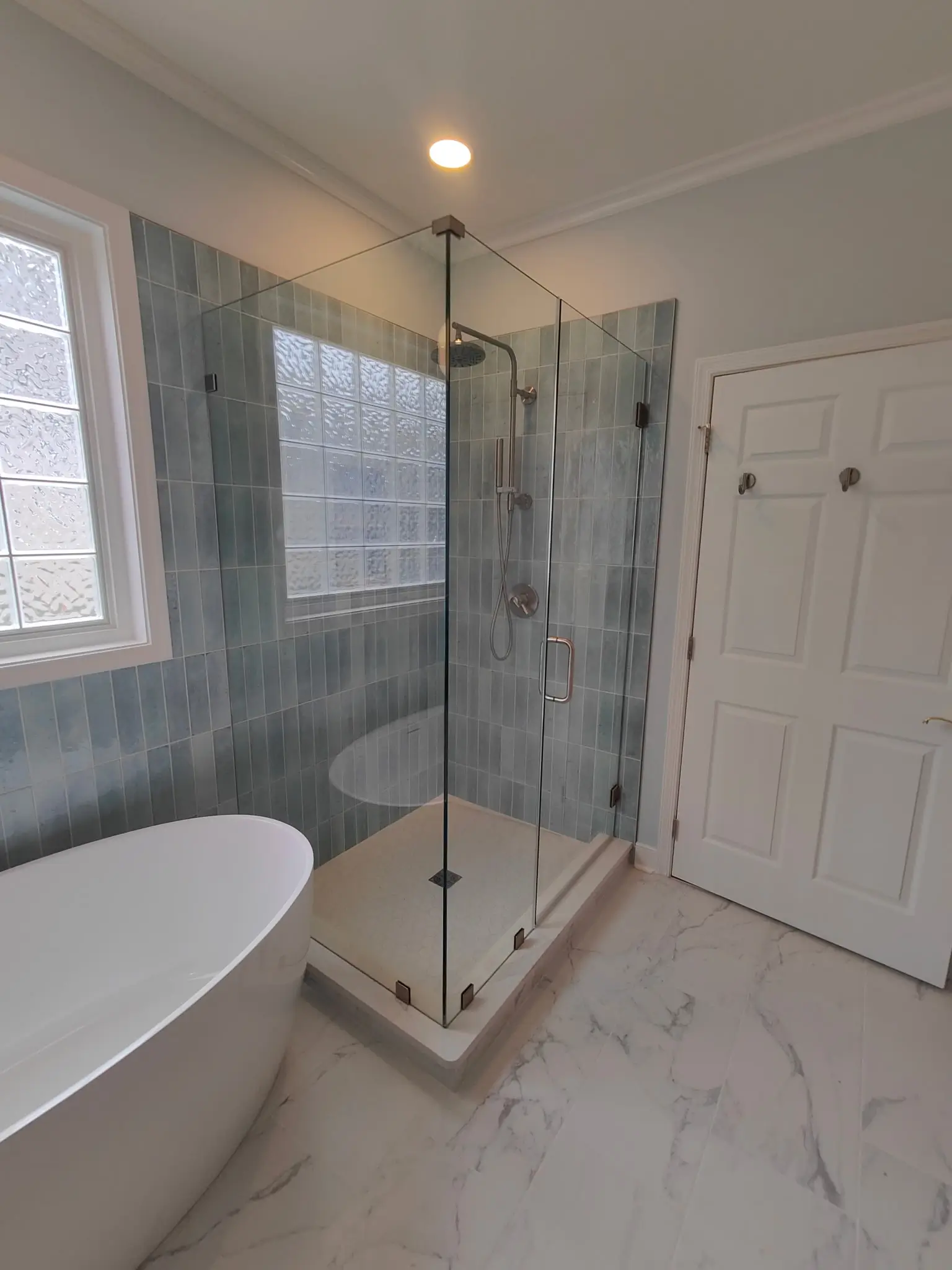
In a shower, the tile has to handle water, soap, and daily cleaning for years. Porcelain and natural stone both look premium, but they behave differently in a wet environment. The right choice is the one that matches how much maintenance you are willing to do — not just the one that looks best on a sample board.
How do porcelain, ceramic, and stone compare?
| Material | Water Absorption | Best Use in a Bath |
|---|---|---|
| Porcelain tile | Under 0.5% — very dense | Floors and shower walls; minimal sealing, strong slip options. |
| Ceramic tile | Higher absorption | Decorative walls in non-submerged areas; not ideal for shower floors. |
| Natural stone | Varies; requires sealing | Feature walls and accents; needs periodic resealing and a tested sealer. |
What makes a shower floor tile safe?
Slip resistance comes from the grout joints and the tile's surface texture. Small-format mosaics offer more grout lines and natural grip. For larger tiles on a shower floor, look for a DCOF rating above 0.42 and a matte or textured finish — polished surfaces are for walls, not the pan. A Bathroom Remodeling estimate should list these specs, not just the color.
You can see finished combinations of porcelain and stone in our Projects. If you have a tile sample already, bring it to your consultation and we can confirm it is suitable for the area you have in mind.
Neres Tile Team
Reviewed by the Neres Tile installation team
Ready to Plan Your Tile Project?
Get a free on-site estimate and technical consultation from Ueslei Neres. We serve Richmond, Short Pump, Henrico, Chesterfield, Midlothian, and surrounding areas.