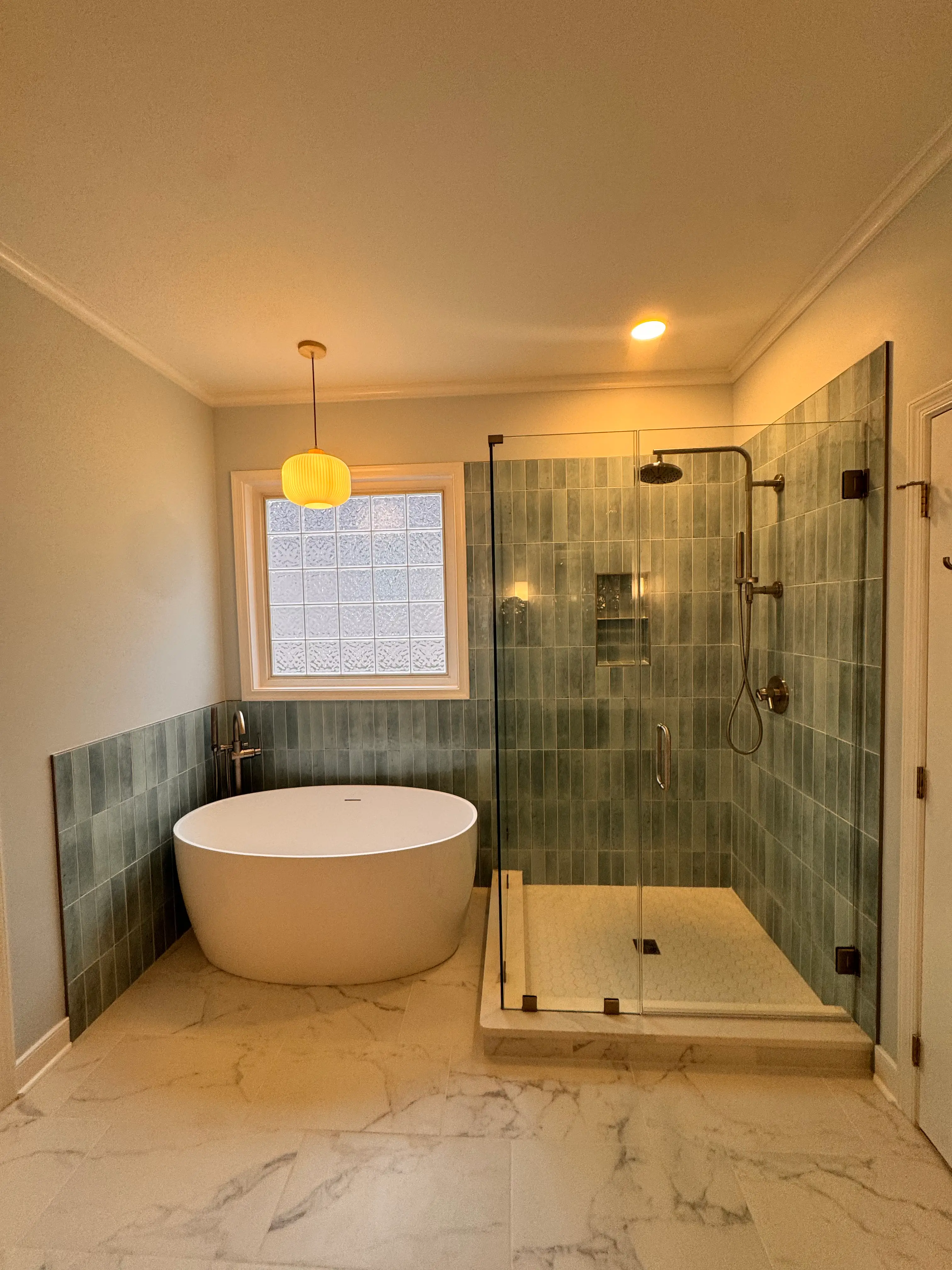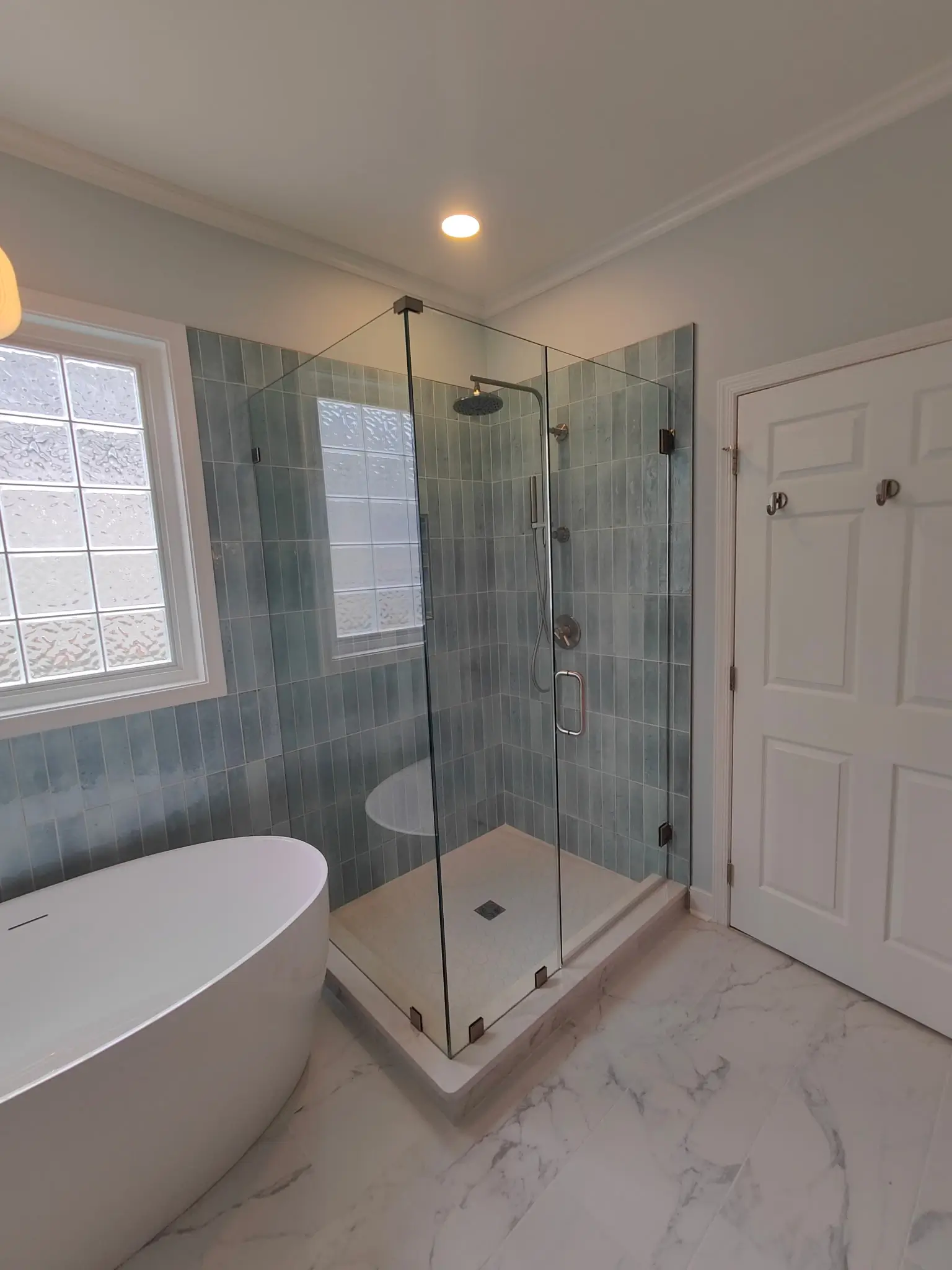
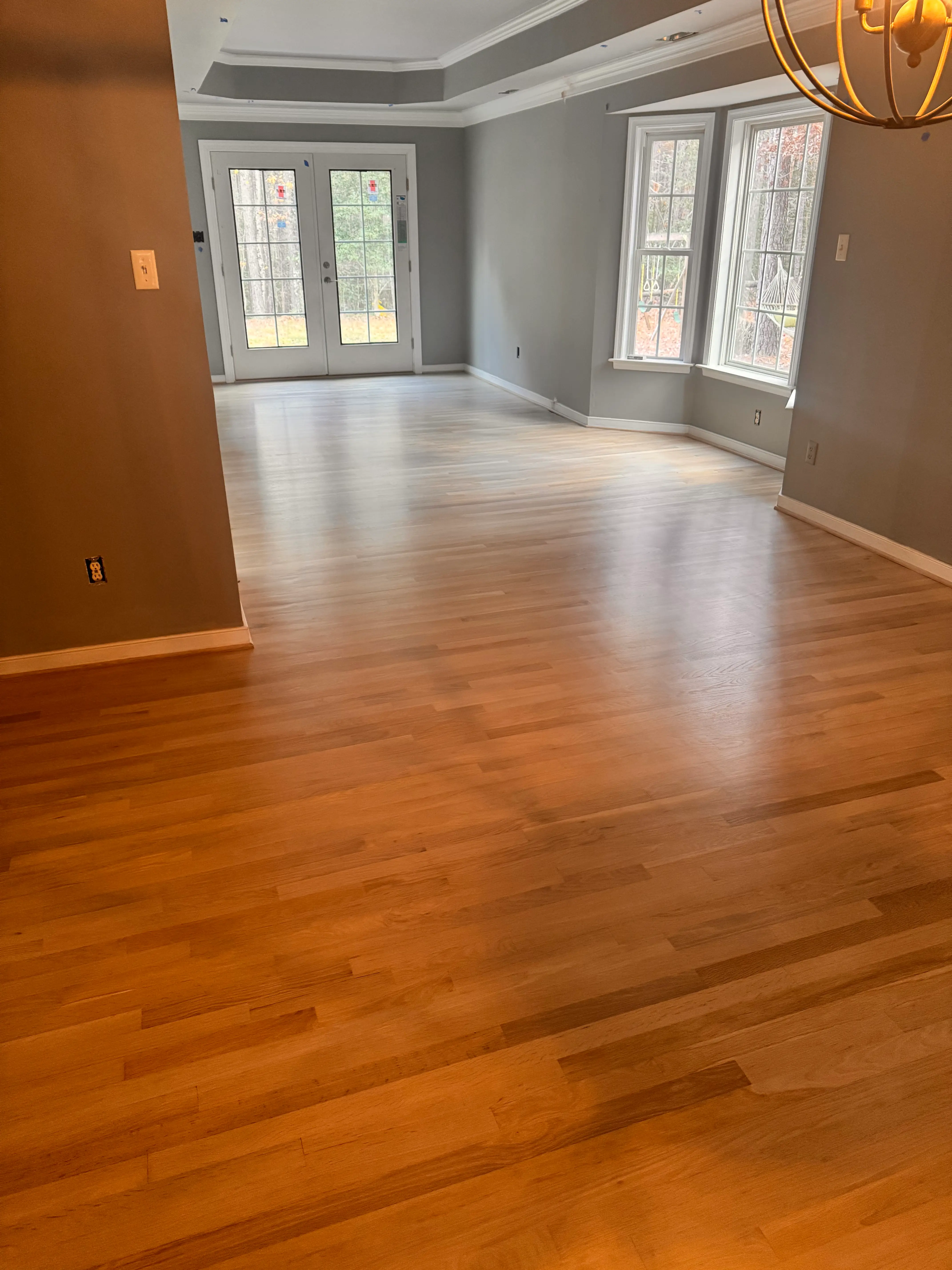
Tile fails for two reasons in older Richmond homes: a subfloor that moves, and a membrane that is missing. Before any tile is set, the subfloor has to be inspected for deflection, levelness, and moisture. The tile itself is rarely the problem — the layer underneath it is.
What does the subfloor need to pass?
- Joist spacing and subfloor thickness rated for the tile and mortar bed you plan to use
- A flat surface within the tolerance the tile size requires — large-format tile is less forgiving of dips
- No active leaks or soft spots from old plumbing or prior water damage
- An expansion gap at the perimeter so the floor can move with humidity without buckling
Do I need an uncoupling membrane?
In a house with seasonal movement — common in the Fan, Church Hill, and older Henrico neighborhoods — an uncoupling or anti-fracture membrane between the subfloor and tile absorbs small shifts instead of transferring them as cracks. It is a small fraction of the total budget and a large fraction of the longevity. A proper Floor Installation accounts for it.
Which rooms benefit most from a refresh?
Living areas and Fireplaces Remodel updates tend to deliver the most visible return in a historic home — a hearth surround and a continuous floor tie the period details together without erasing them. Accent walls with Wall Tile Installation can add texture without a full gut.
Before you commit to tile, we can inspect the subfloor and confirm whether the surface is ready. Book a consultation and we will walk the space with you.
Neres Tile Team
Reviewed by the Neres Tile installation team
Ready to Plan Your Tile Project?
Get a free on-site estimate and technical consultation from Ueslei Neres. We serve Richmond, Short Pump, Henrico, Chesterfield, Midlothian, and surrounding areas.